Five Letters to Make You Better at Listening
Stewart Bewley
'What have you done? The kids aren’t screaming and I feel totally listened to.' These are the words that came out of LIz, my wife’s mouth over 8 years ago. She had just come back from an exhausting day running her charity in London and I had just come back from a day learning how to listen. I love people and I love hearing their stories. But sometimes, (I used to feel) people wouldn’t give me enough information or get there fast enough. So I would jump in, probe a little bit, try and get the information out of them. Surely I was being helpful right?
Wrong. It turns out.
If you have never read Steve Covey's book 'Seven Habits of Highly Effective People,' please do. Habit Five is 'Seek first to understand' – learn to listen actively. When I attended a day's workshop, run by my friend Richard Garnett on listening, I discovered some shocking things about myself. Steve Covey argues that most people listen to reply, not to understand. And half a day in to Richard’s workshop I realised I was guilty of bad listening. I walked up to Richard and said 'Richard, I am a prober!' He said to me 'Stew, you are a work in progress.' So I went home, armed with my new listening tools and put them into practise with Liz. I didn’t really think it would work.
I was so wrong.
I asked her how her day was, and then, instead of interrupting and saying 'Oh yes, getting on the tube is a nightmare,' I did this unusual thing – I gave her Time with my eyes and body language and psychological Air. I was silent. I encouraged when I needed to – words and phrases that kept her telling the story, making sure not to take it off on my own track. Words like: really? And then? Because?
Then I Played back what she had said. Without any interpretation. Just what I had heard. And this is what I heard:
She had got on the tube, it had been really hot, sweaty and a long journey. Then she had to get back on the tube after her very short day, pick up the kids and get them back home.
I played it back: the whole school-drop-off-London-Underground-repeat-sweaty-people journey. Not word for word, because I am not a parrot and that would look and sound weird.
Playback is not commenting.
Playback is not interpreting.
Playback is also not repeating like a parrot.
I used different language but told the same story through her eyes. I said, 'So you dropped the kids off, rushed to the train and the Underground, were surrounded by sweaty people and felt exhausted before your day had even begun. You only had three hours before doing it all over again, and you had to check your emails on the way back, which is the last thing you wanted to do because you were trying to put down the day before picking up the kids.'
I played back what she said – the essence of it, making sure I had picked up the flow. And I showed Empathy. I said at the end, 'That sounds exhausting.' Liz then said 'Yes, It was , because ….'. When someone says 'Because', they are starting to unpeel their layers, like an onion needs unpeeling. Because the truth is no-one really knows what they actually want to say. The heart is a deep well and needs drawing out. It needs playback and the opportunity to reflect.
As Liz spoke over the next few minutes I kept playing back, with empathy. When I was silent, Liz used the B word on herself. She said, 'It was exhausting, because I just feel like I am getting nothing done and I hate turning up to the kids and not really being present.'
When you get a 'because' you know the person in front of you is peeling off the layers and revealing what they are feeling. At that moment, I had to choose to resist asking a question (remember, I am a prober so it is my natural, untaught state), or offer a solution. I had to choose to keep peeling the onion, to keep playing back. It felt unnatural and a bit forced, but it really helped Liz talk.
I played back to Liz what she said: 'So you are feeling like you can’t really get anything done and you aren’t present for the kids as a mum.' We then had a profound conversation about her struggles with being both Mum and the leader of a charity. We talked deep and long and that is what led her to say 'I just don’t feel like I’m being a good mother'. It was then I stopped playback and told her that I understood the exhaustion of one day and her feeling like she was present to no one. But these are the things that I see in her that make her a great mother. It was a really moving conversation.
Then she said to me 'What have you done? The kids aren’t screaming and I feel totally listened to.' I couldn't believe it – it worked! So I said 'let me tell you what I have done!' And for the past eight years in work, in home life, with friends and family, in easy times and times of conflict both Liz and I have chosen to listen like this.
It’s not easy, you always want to interrupt and say the point you have to make, but Steve Covey says that if you allow the other person to speak, to influence you, you will be surprised at how much closer you can move towards the other person. And in business you end up becoming a trusted partner, someone they want to work with.
Shocking controversial fact: Women are generally better at this than men. Prove me wrong.
So how do you do it? I highlighted certain letters and here they are
Time – give time. Literally say in a meeting 'I am going to listen for the first ten minutes.' I did this when I had a conflict situation with a client. He thought I had gone behind his back to work with a partner at PWC. I started the reconciliation meeting saying 'Tom, I am going to listen to your side of the story.'
Air – give air. Let them speak, remain silent, give them your eyes and your body language. If you fold your arms and don’t smile and look impatient it is like you are sucking air out of the room. And they will leave it. I let Tom speak and speak and speak. I encouraged him, phrases like 'go on,' 'because' are really good here.
Playback – Actually playback what has been said. Don’t interpret, don’t interrupt. I said 'Tom, thank you. You said...' then I told him what he said. That is hard to do when you are the potential villain. But playback is not about agreeing with the person. It is about making sure they know you have tried to hear them. If you haven’t got it right they will say 'No – it’s this.' After the initial playback you will be tempted to
- Fix it
- Ask a direct question
Don’t do either. Let them speak again – unpeeling the onion again. You will be surprised what happens. They will speak. If it feels it is coming to a dead end, and they say 'Yes,' you can then say 'Because'. This is an open question that encourages them to keep going. Any open question keeps them going. Don’t ask 'why?' It is aggressive and leads them down your path of where you want to go, not theirs. To help you playback well remember that you need to do it with...
Empathy – After I played back to Tom I said 'You must have felt like I was going behind your back.' I was not defensive. I agreed with his emotion. He said 'Well I knew you were a good guy so I wanted to have this meeting.' It ended up being a very good meeting.
When you have done TAPE, then you have a right to speak, to share your thoughts. At that point your thoughts will be so aligned to their story that you won’t misread them.
Summarise – I had a meeting with Microsoft in August 2016. We talked about potential coaching in the future. It was not a definite. But I had learnt to summarise, so I did just that. As we drew the meeting to a close, I summarised everything that had beed said and then I said 'Is there anything else you would like to add?' To my complete surprise they said 'Yes, actually can you do some coaching for us in Amsterdam, Spain, Portugal, Switzerland, Barcelona?' That last five minutes was a game changer for my business, all because I summarised and asked them that question. I have not stopped asking that question ever since. I would suggest you do the same!
I didn’t summarise with Liz – don’t do that with personal relationships. But with business relationships not only is this allowed, it is crucial. It allows people to say what they actually want to say.
So, two things I want you to do:
Personal: The next time you ask someone you love about their day, take time to play back and get them to 'Because...'. It will surprise you!
Business: Apply TAPES to any setting – your team, your peers, your juniors, your seniors. It works. There will always be an outlier - someone who is a nightmare to listen to. Don’t let it stop you.
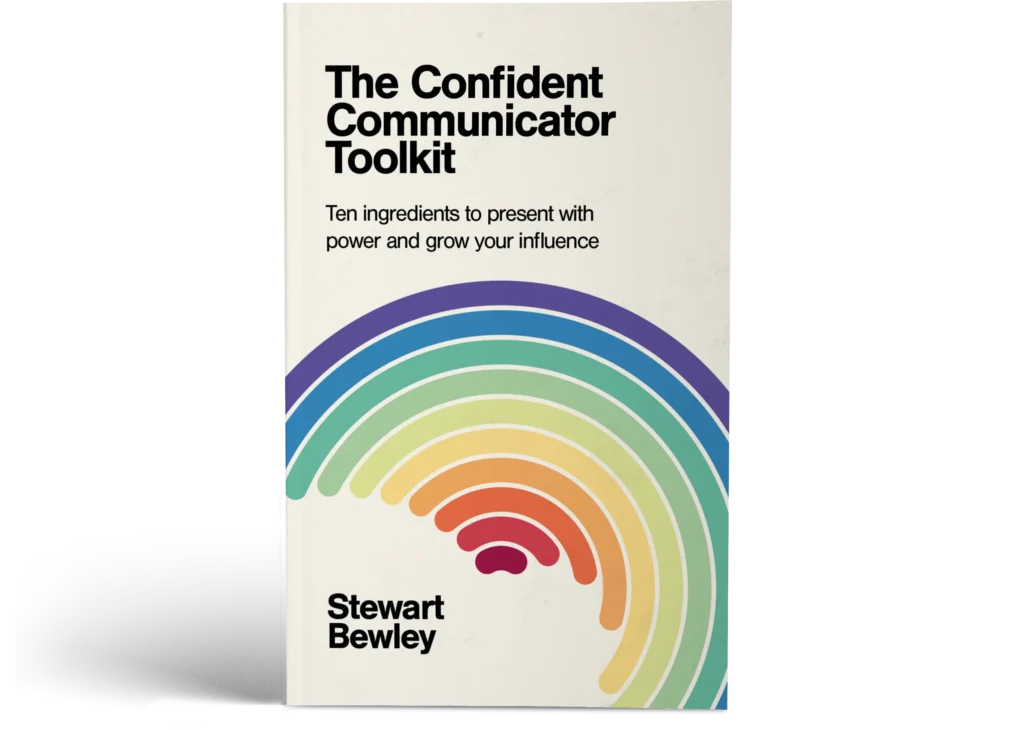
Coming Soon: The Confident Communicator Toolkit
Be the first to know when my new book The Confident Communicator Toolkit: Ten ingredients to present with power and grow your influence is released—and get an exclusive PDF download!